Advertising helps fund Big Issue’s mission to end poverty
News

Young muslims say racial prejudice against them is rising in Britain

Still, Muslims are more likely to say that ‘being British’ is important to their sense of who they are than Brits in general

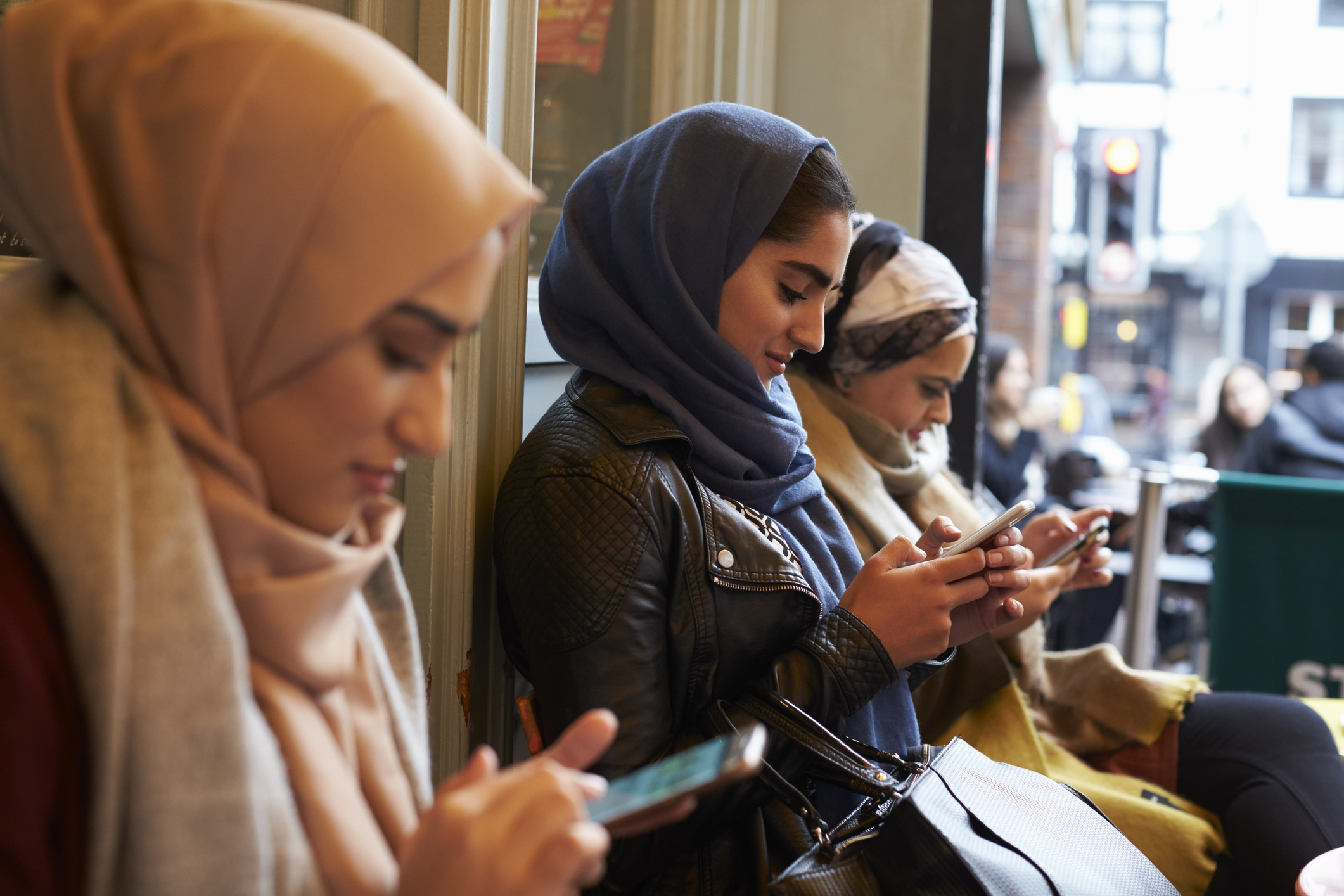
Group Of British Muslim Women Texting Outside Coffee Shop

A new report into changing attitudes among ‘millennial’ Muslims has revealed that forty percent of Muslims believe religious prejudice has increased in Britain, with young people more likely to feel they have been discriminated against.

The Ipsos MORI research, which reviewed data taken from surveys over the last 10 years, found that 36 percent of 18 to 24-year-old Muslims were likely to feel they had been discriminated against “often”, while 27 percent of those aged 55 and over said they had experienced discrimination.

The increase in prejudice was revealed in data taken from two surveys carried out in 2015, asking people if they felt prejudice had increased or decreased over the preceding five years.

Two Scottish politicians recently stated that they believe racism and Islamophobia have got worse in Scotland. The SNP’s Transport Minister at Holyrood, Humza Yousaf, and Labour MSP Anas Sarwar, said they regularly receive violent death threats through social media and email, and that members of the Muslim community and other faiths also reported a rise in abuse, in person as well as through digital media.

The report also found that the majority of Muslims – 70 percent – feel they are treated fairly by the British government. Muslims are more likely to say that ‘being British’ is important to their sense of who they are than Brits in general: only 44 percent of British adults as a whole say their national identity is important, that figure rises to 55 percent among Muslims.

Supported for the Aziz Foundation, Barrow Cadbury Trust, Joseph Rowntree Charitable Trust and Unbound Philanthropy, the study aimed to learn more about opinions and attitudes among Britain’s Muslims, who make up 4.8 percent of the overall population. Islam is the second-largest religion in Britain, after Christianity, and half of all Muslims are aged under 25, with one-third aged under 15.


Advertising helps fund Big Issue’s mission to end poverty

A particular focus was attitudes among ‘Millennial Muslims’ – people born between 1980 and 1995 – and how they differ from older generations.

The report shows that while British Muslims identify strongly with their religious identity, they are also staunchly British

Other findings included:

  • Muslims are more likely to feel that education is part of their self-identity than Christians, with 55 percent of Muslims stating it is important compared to 35 percent of Christians.
  • Millennial Muslims are more likely to believe homosexuality should be legal in Britain than the older generation: 28 percent of 18- to 24-year-olds think it should, compared to 18 percent of Muslims overall.
  • Between 2001 and 2011 the education gap closed more significantly among Muslims than the overall population. In 2001 29 percent of all people aged over 16 in England and Wales had no qualifications, and 38.6 percent of Muslims. In 2011 that had fallen to 22.7 percent overall, and 25.6 percent among Muslims.
Our 2020 Impact Report

The Big Issue has given more than £1 million support to Big Issue vendors struggling due to the lockdown restrictions. To mark the significant milestone, we have published an impact report, documenting the seismic shift the organisation has undergone in the past 12 months.

View Report

“The report shows that while British Muslims identify strongly with their religious identity, they are also staunchly British and display feelings of commonality with other Muslims and with fellow Britons,” said Asif Aziz, chair of the Azis Foundation.

Keep reading the journalism that powers our mission

Register free to continue and learn more about the stories, campaigns and the support we provide, helping people facing poverty across the UK.

“I hope this report will go some way towards dispelling the narrow, largely negative, representations of British Muslims in our public and media discourse. I hope it will encourage richer, more nuanced reflections that recognise the significance of the changes we are witnessing among younger Muslims, and what they mean for the future of our country as a place where people of all faiths, and none, can live well together and thrive.”

Main image: iStock

Advertising helps fund Big Issue’s mission to end poverty

Do you know how Big Issue 'really' works?

Watch this simple explanation.

Recommended for you

View all
Ending rough sleeping isn't just about money – it takes everyone pulling together
Andy Burnham, pictured in a media interview at No 10, has promised to end rough sleeping
Letters

Ending rough sleeping isn't just about money – it takes everyone pulling together

How the Big Grow is strengthening communities and building resilience through growing food
Tatiana Hardy tends her school garden as part of the Big Grow project
Food

How the Big Grow is strengthening communities and building resilience through growing food

Is it fair to ask a homeless person to give up their pet to get a home? Half of Brits say no
Big Issue vendor, Alfie Brew on his pitch at Co-op, St Thomas, Exeter
Housing

Is it fair to ask a homeless person to give up their pet to get a home? Half of Brits say no

The success of Andy Burnham’s rough sleeping pledge can’t be judged on Christmas Day. Here’s why
Prime minister Andy Burnham meets former rough sleepers at Independence Initiative alongside Lord John Bird, John Healey and Angela Rayner
Emma Haddad

The success of Andy Burnham’s rough sleeping pledge can’t be judged on Christmas Day. Here’s why